
wollongongrestumping@gmail.com


Concrete vs Steel Stumps for Wollongong Homes: Which Is Best?
Rao Hasnain • August 11, 2026
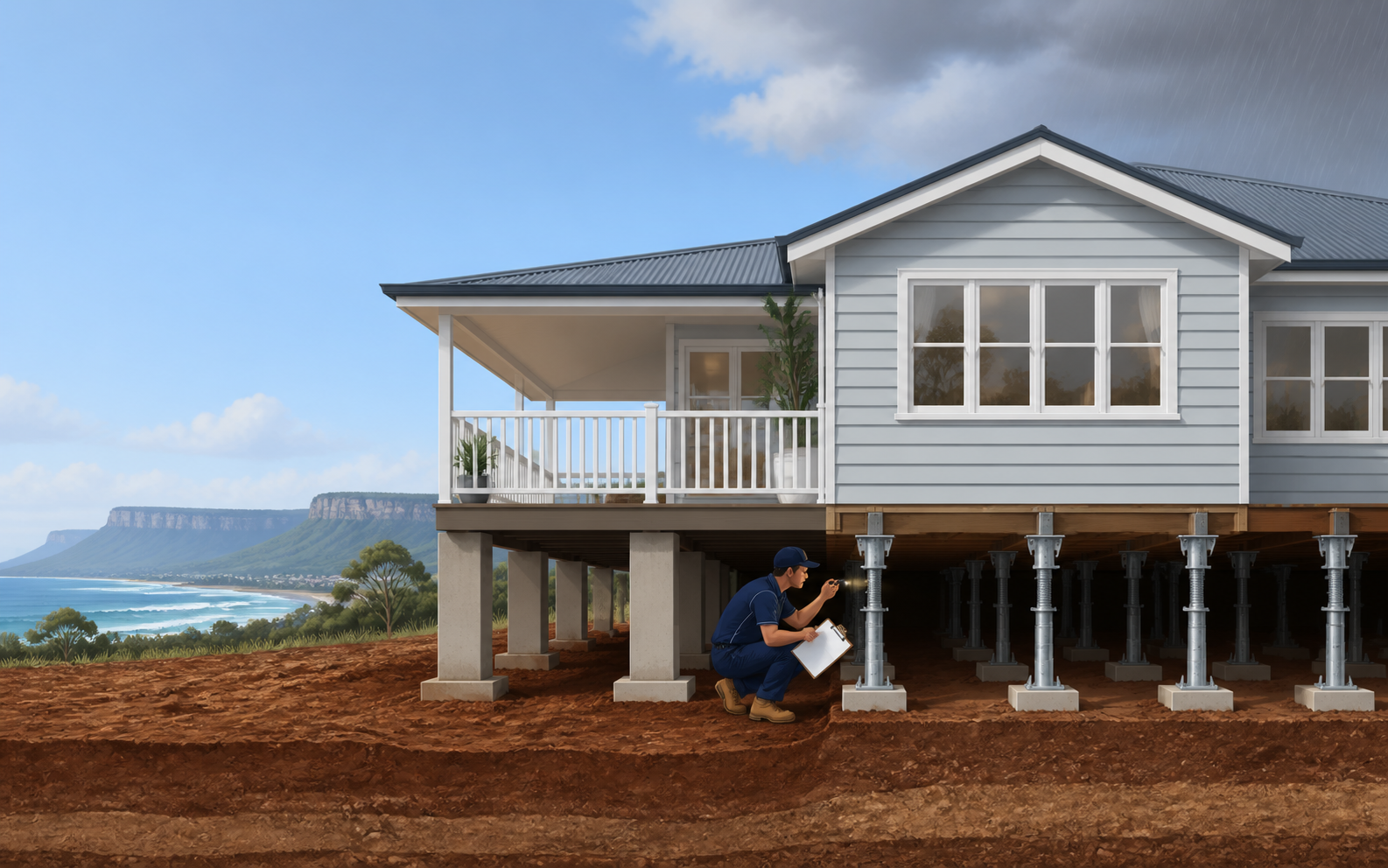
Steel stumps are the better long-term choice for most Wollongong properties, especially in coastal suburbs and on reactive clay, because they resist salt-air corrosion and can be re-levelled without a full restump. Concrete stumps remain a solid, cost-effective option for inland homes on stable ground where salt exposure isn't a factor. Your suburb, soil type, and budget should decide which one is right for your home.
Why Stump Material Matters More in Wollongong
Wollongong sits between the Illawarra escarpment and the coast, and that geography works against timber and low-grade materials in ways that flatter, drier regions don't experience. Clay-heavy soils across much of the Illawarra expand and contract with rainfall, while coastal suburbs deal with salt-laden air that accelerates corrosion on anything metal. High annual rainfall adds a third pressure: moisture ingress, which is the trigger for both timber rot and concrete cancer.
None of this means one material is automatically wrong. It means the decision should be based on where your home sits, not a generic national comparison. A concrete stump that performs well in a dry, stable suburb inland can behave very differently a few kilometres away, closer to the water.
Pros and Cons for Wollongong HomesConcrete Stumps
Where Concrete Performs Well
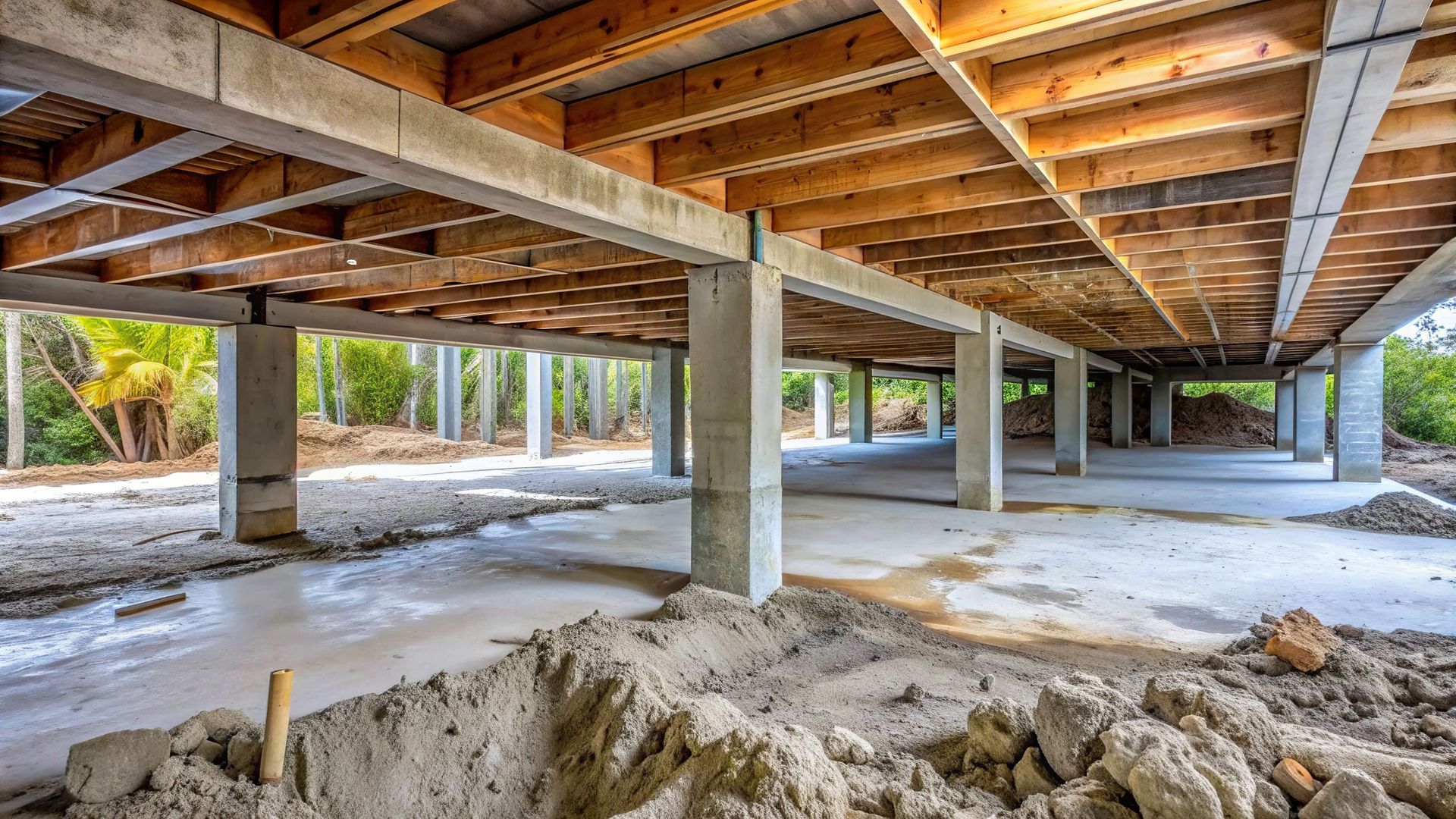
Concrete stumps are dense, heavy, and resistant to termites and rot, which makes them a dependable option on stable, well-drained blocks. They're non-combustible, which some homeowners weigh heavily given bushfire risk in parts of the Illawarra hinterland. Concrete is also generally the more affordable of the two materials, and it's a familiar option that most licensed restumping contractors can source and install without lead times.
Where Concrete Falls Short
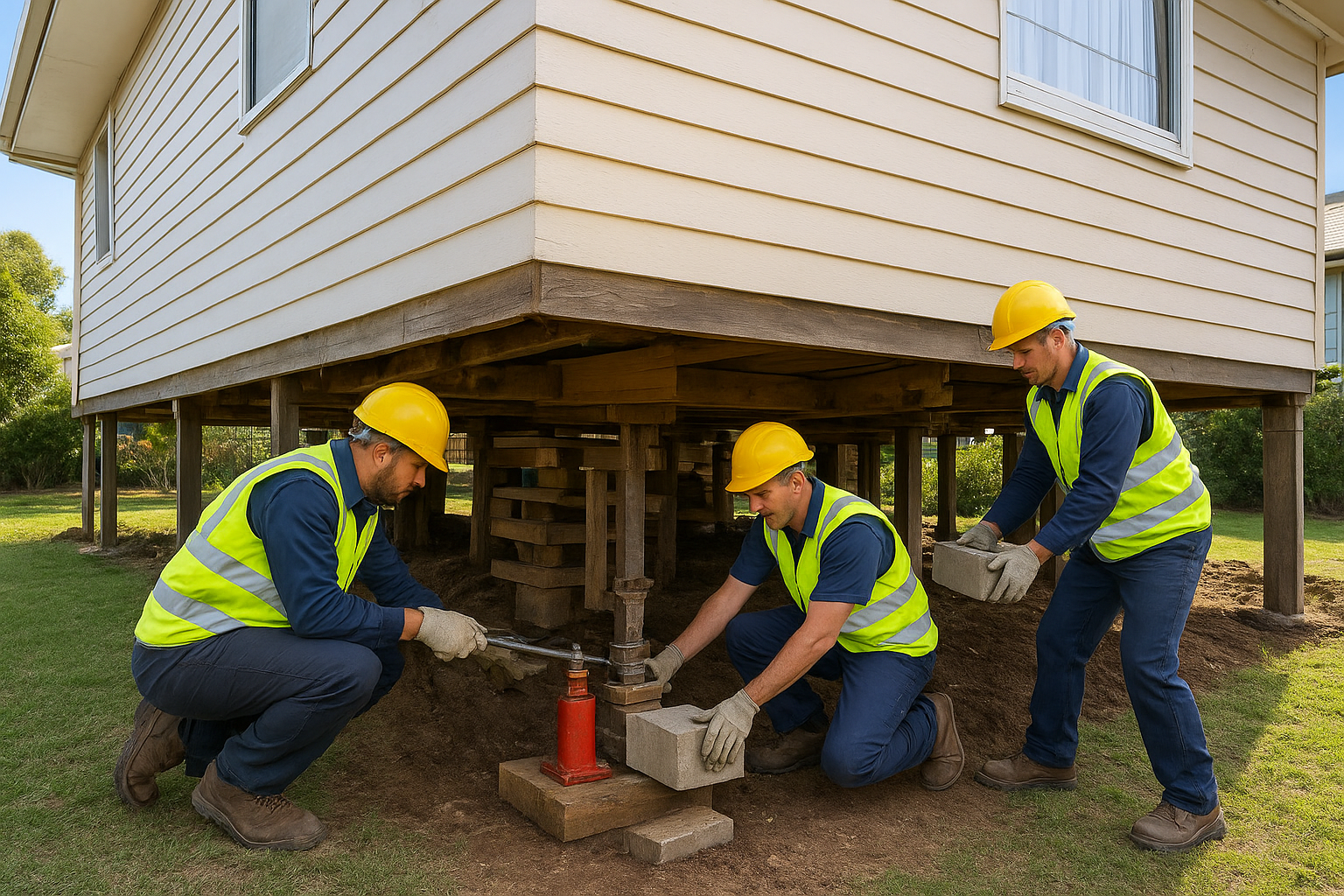
The main risk is concrete cancer: moisture reaches the steel reinforcing inside the stump, the rebar rusts, and the rust expands and cracks the concrete from the inside out. That risk climbs in high-rainfall areas and anywhere salt air can reach exposed or damaged concrete. Concrete stumps also can't be adjusted once installed. If the ground moves again, relevelling usually means replacing the stump rather than fine-tuning its height, which is a meaningful long-term cost difference against steel. Their weight is also a practical downside on sloped or hard-access blocks, where every stump has to be manoeuvred into position.
Pros and Cons for Wollongong Homes
Steel Stumps
Where Steel Performs Well
Hot-dip galvanised steel stumps resist termites, rot, and fire, and they hold up well against the ground movement that's common in reactive clay across the region. The standout advantage is adjustability: steel stumps can be re-levelled after installation, so if your floors move again in ten or fifteen years, a specialist can often correct it without a full restump. They're also lighter than concrete, which speeds up installation and makes them easier to work with on tight or elevated subfloors.
Where Steel Falls Short
Steel costs more upfront than concrete, both in materials and installation. Corrosion resistance also depends entirely on quality: stumps need to be properly hot-dip galvanised, particularly for coastal properties, or rust becomes a real risk over time. Cutting corners on steel grade is the one scenario where steel underperforms concrete, so the quality of the product matters as much as the material choice itself.
Concrete vs Steel Stumps at a Glance
| Factor | Concrete Stumps | Steel Stumps |
|---|---|---|
| Typical lifespan | 50+ years on stable ground; shorter if concrete cancer sets in | 50+ years with proper galvanising |
| Adjustable after install | No, usually needs replacement | Yes, can be re-levelled |
| Coastal salt-air resistance | Moderate; moisture increases cancer risk | Strong, if hot-dip galvanised |
| Performance on reactive clay | Good, but fixed once poured | Very good; adjusts with ground movement |
| Installation weight/speed | Heavy, slower on tight sites | Lighter, faster install |
| Fire resistance | Excellent | Excellent |
| Relative upfront cost | Lower | Higher |
| Best suited to | Inland, stable-soil properties on a budget | Coastal homes, reactive clay, long-term value |
Which Stump Type Suits Your Wollongong Home?
Coastal suburbs (Wollongong CBD, Thirroul, Austinmer, Corrimal, Port Kembla and similar): hot-dip galvanised steel is generally the safer long-term pick, given ongoing salt-air exposure.
Inland and escarpment areas (Mount Kembla, Mount Ousley, Figtree and similar): concrete performs well if the soil is stable and well-drained, and it's often the more budget-friendly route.
Reactive clay blocks anywhere in the Illawarra: steel's adjustability is a genuine advantage if your home has a history of shifting or your floors have needed levelling before.
Heritage or character homes: concrete is often chosen to match original stump lines and council heritage expectations, though a mix of materials can sometimes achieve both compliance and performance.
Tight budgets on stable ground: concrete remains a legitimate, durable option; it isn't the wrong choice, just a different trade-off between upfront cost and long-term adjustability.
If you're unsure which category your property falls into, that's exactly what an on-site inspection is for. Soil type, drainage, and existing stump condition all factor into the recommendation, and guessing from a blog post is never a substitute for someone assessing your subfloor directly.
What Drives Restumping Costs in Wollongong
Costs vary a lot depending on the number of stumps, site access, soil conditions, and which material you choose, so any figure you see online is a starting point rather than a quote. As a general guide, Australian restumping projects typically run from the low thousands for a small partial job to well into five figures for a full restump on a larger home, with steel usually sitting above concrete on a per-stump basis due to material and adjustability.
The only reliable way to know what your project will cost is a fixed, written quote after someone has actually assessed your subfloor.
Get a free on-site inspection and you'll walk away with real numbers instead of a national average that may not reflect Wollongong's soil and access conditions.
Frequently Askes Questions
Which lasts longer, concrete or steel stumps?
Both can last 50 years or more when installed correctly. Concrete's biggest threat is concrete cancer from moisture ingress; steel's biggest threat is corrosion from poor-quality galvanising. In practice, well-installed steel tends to hold up better in Wollongong's coastal and high-rainfall conditions.
Are steel stumps worth the extra cost in Wollongong?
For coastal properties and reactive clay blocks, yes, the ability to re-level steel stumps without a full restump usually offsets the higher upfront cost over the life of the home.
Can concrete stumps be used near the coast?
They can, but the risk of concrete cancer is higher with sustained salt-air and moisture exposure. If you prefer concrete for a coastal property, ask about higher-grade, well-sealed concrete and factor in more frequent inspections.
Do I need council approval to change stump material?
Requirements vary depending on the scope of work and your property. A licensed restumping contractor will typically confirm what's needed with Wollongong City Council or your certifier as part of the job, so it's worth raising early in your quote.
How do I know which stumps my house currently has?
Most homes built before the 1970s originally had timber stumps, though many have since been partially or fully replaced. The only accurate way to confirm what's under your home now is a subfloor inspection.
Ready to work with Wollongong Restumping?
Let's connect! We’re here to help.
Send us a message and we’ll be in touch.
Or give us a call today at 0242026325
Agency Contact Form
More Marketing Tips, Tricks & Tools
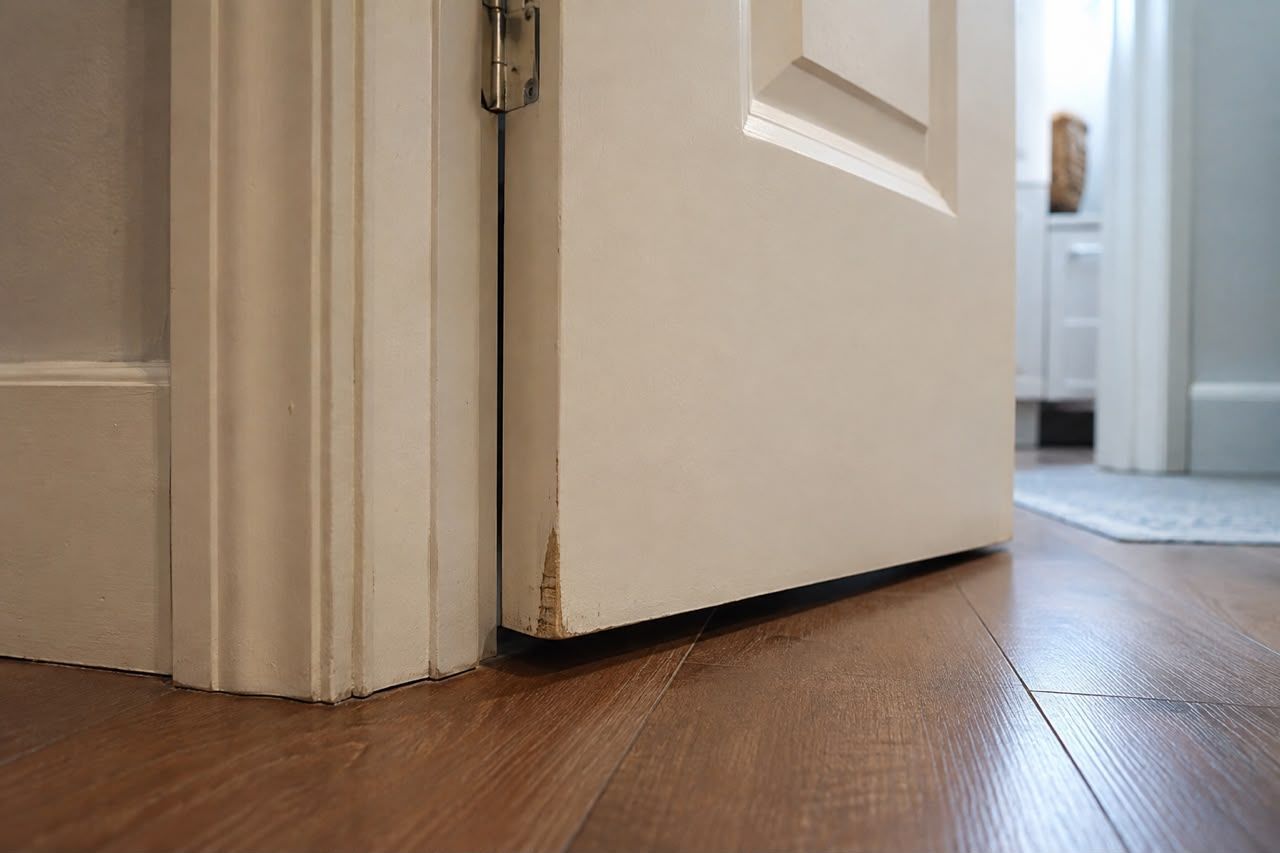
Learn why doors suddenly stop closing after foundation movement, from shifting floors to damaged stumps, and when your Wollongong home may need an assessment.
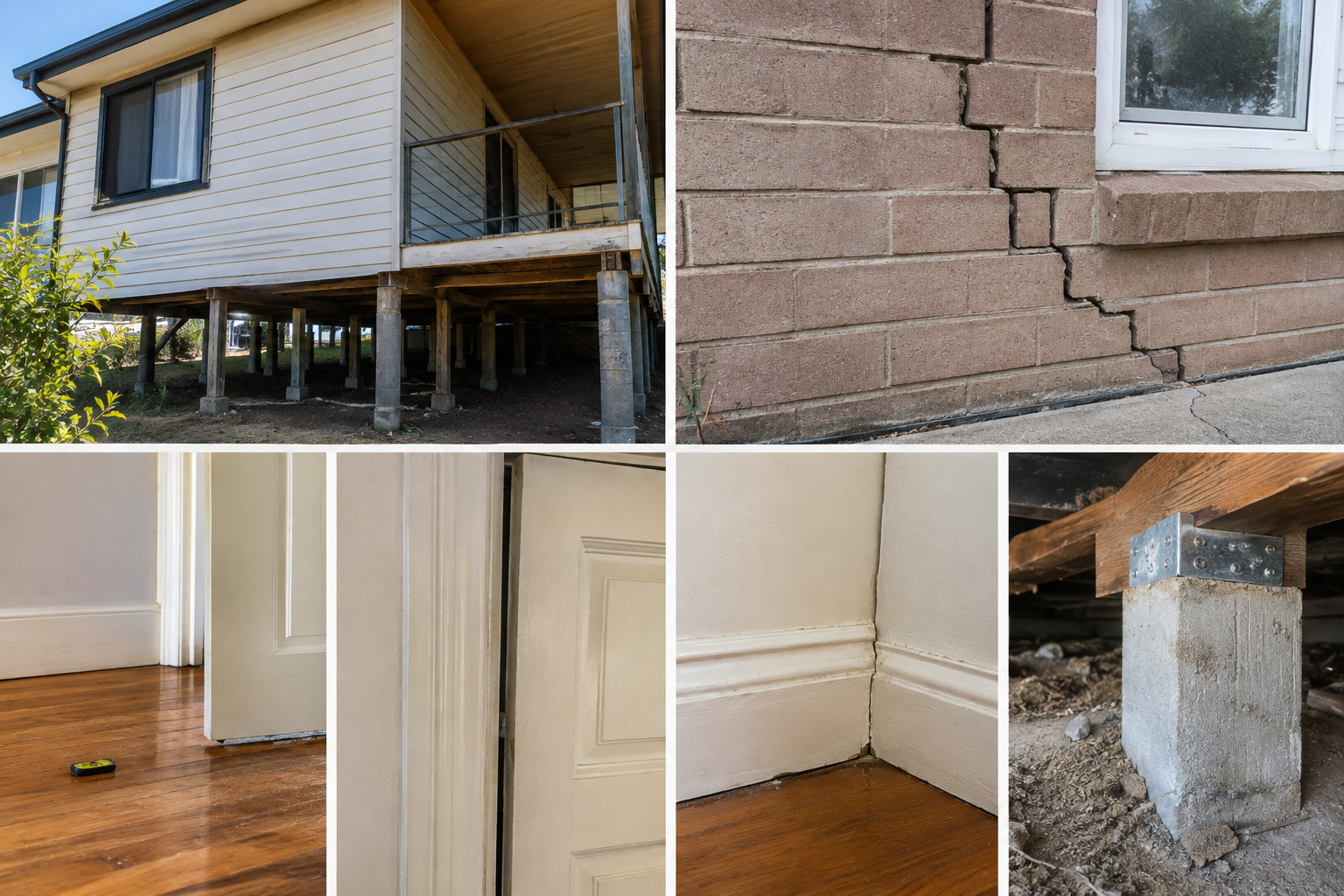
Sagging floors, sticking doors, cracked walls? Here's how to tell if your Wollongong home needs restumping, underpinning, or both.
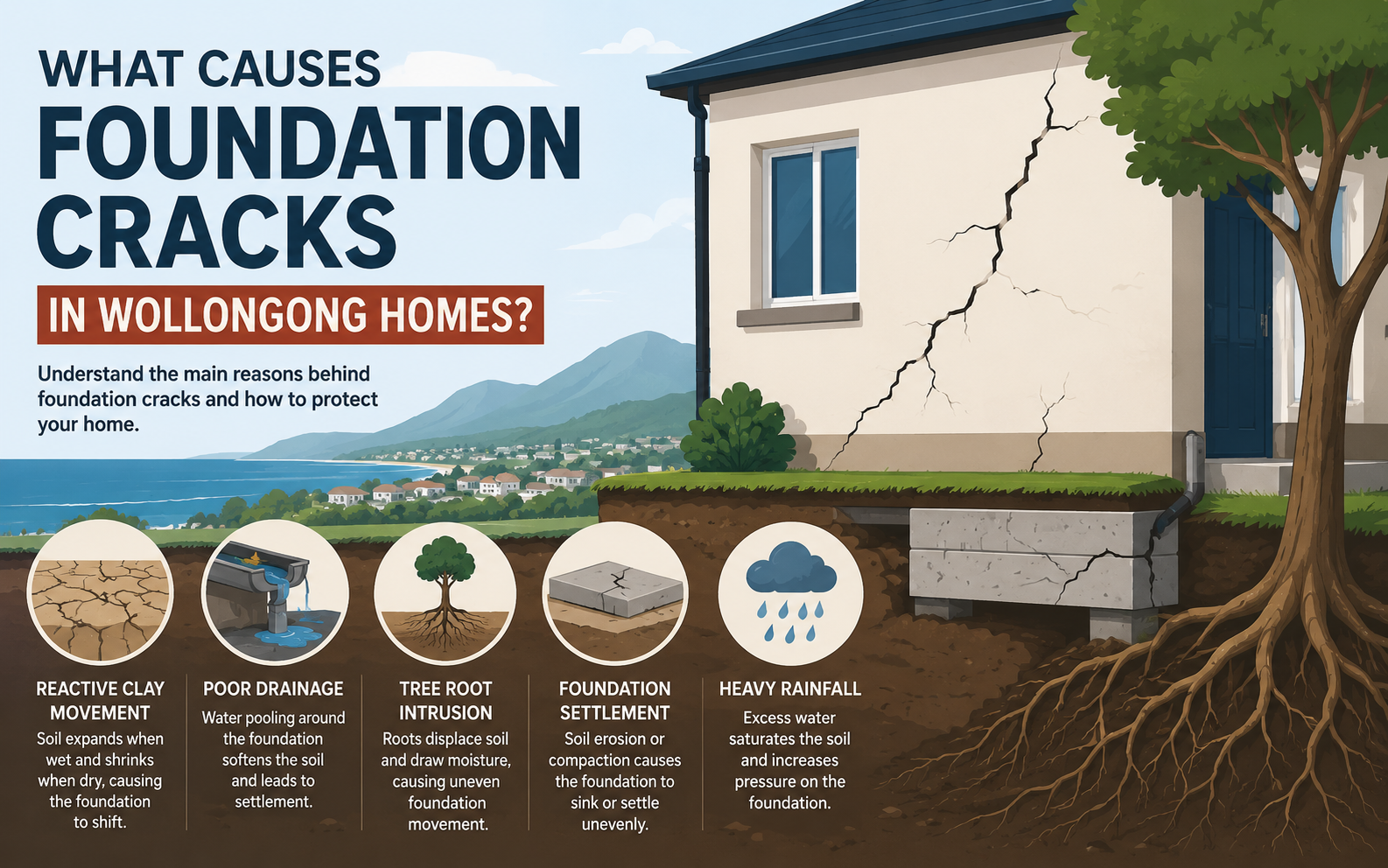
Foundation cracks in Wollongong homes are rarely random. Here's what's causing them, how to read the damage type, and when you need professional repair.
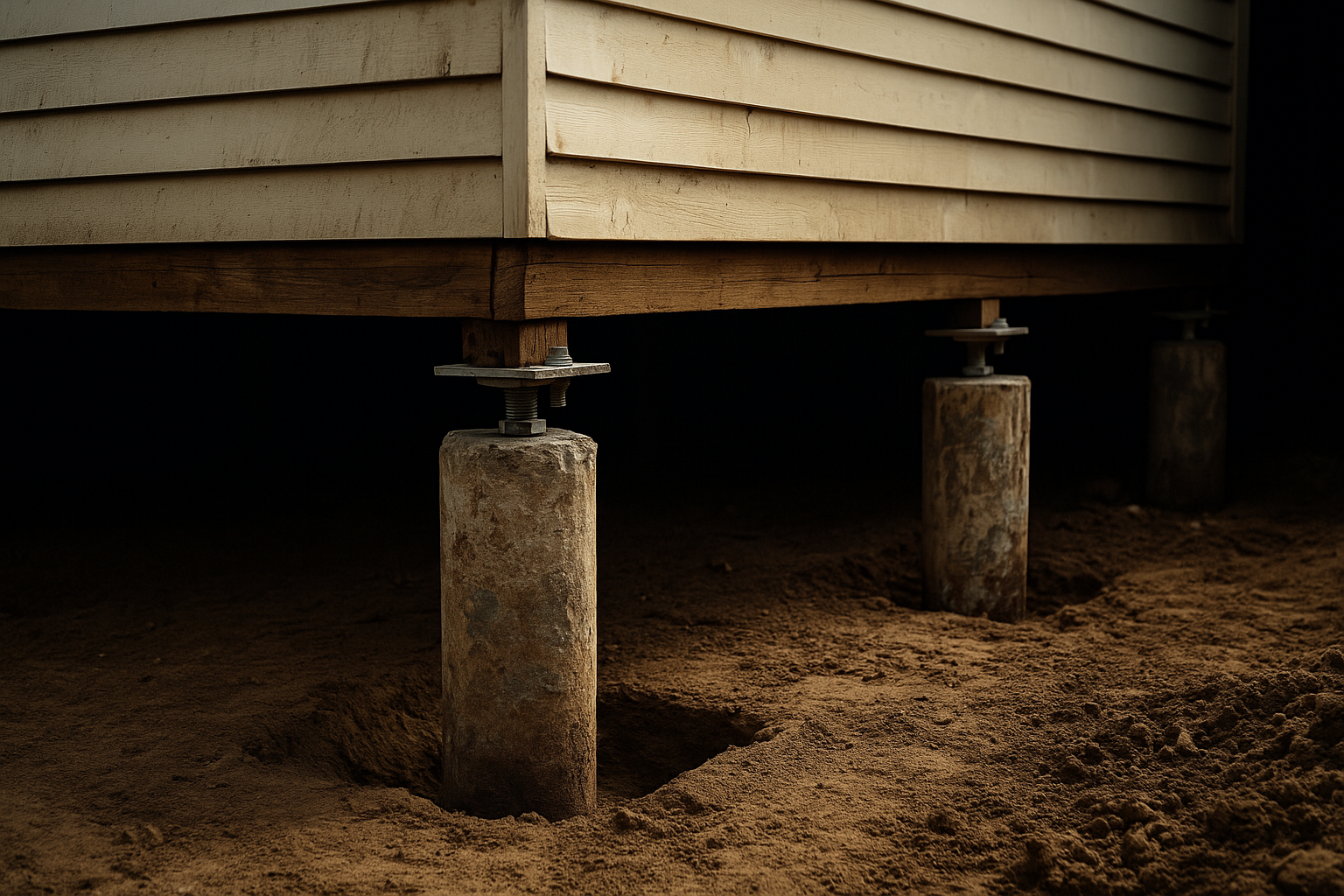
Early foundation repairs prevent structural damage, reduce costly future fixes, and help maintain property value by addressing issues before they worsen.
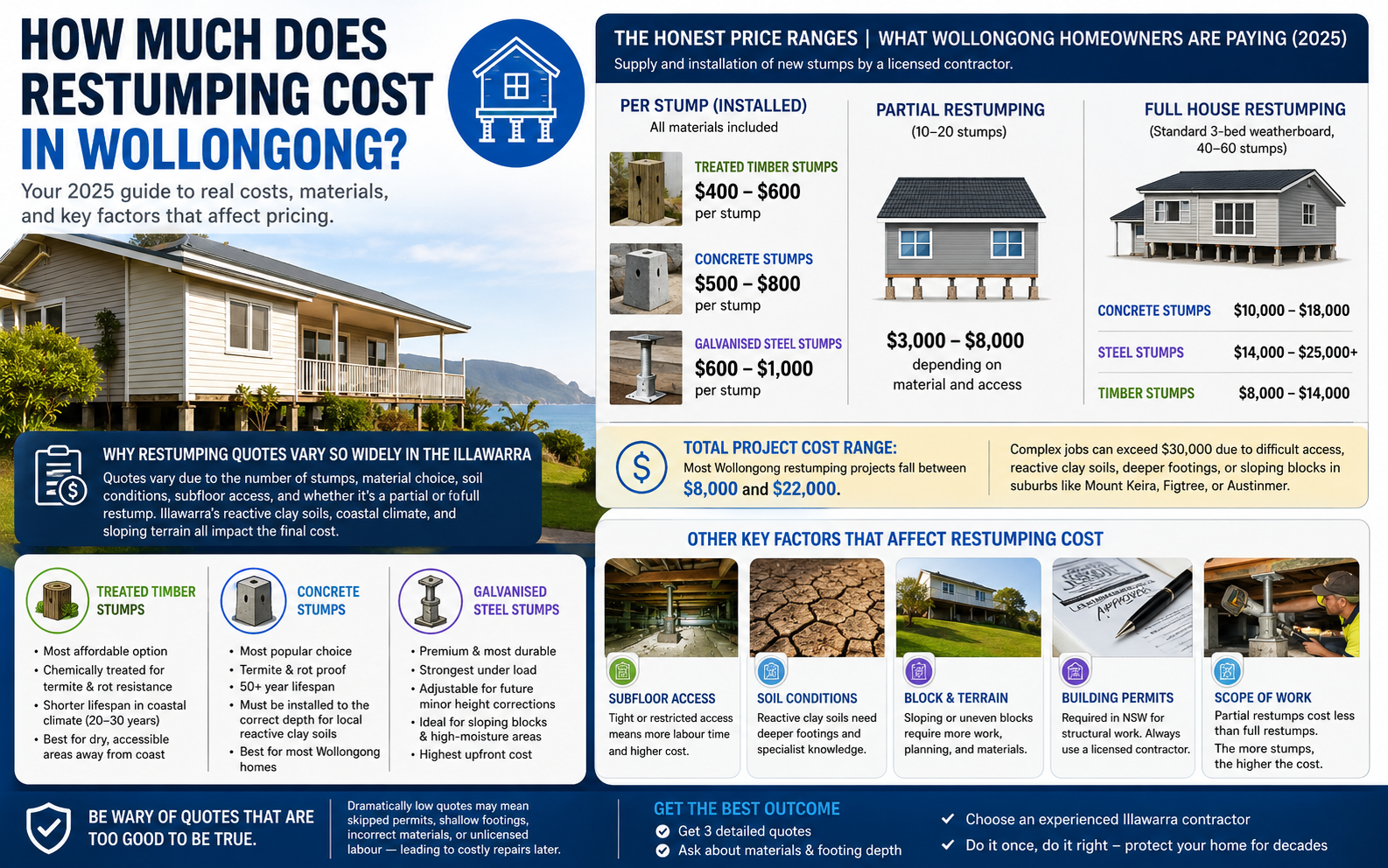
Get accurate restumping costs for Wollongong homes, including per stump pricing, material comparisons, permits, and Illawarra site factors.\
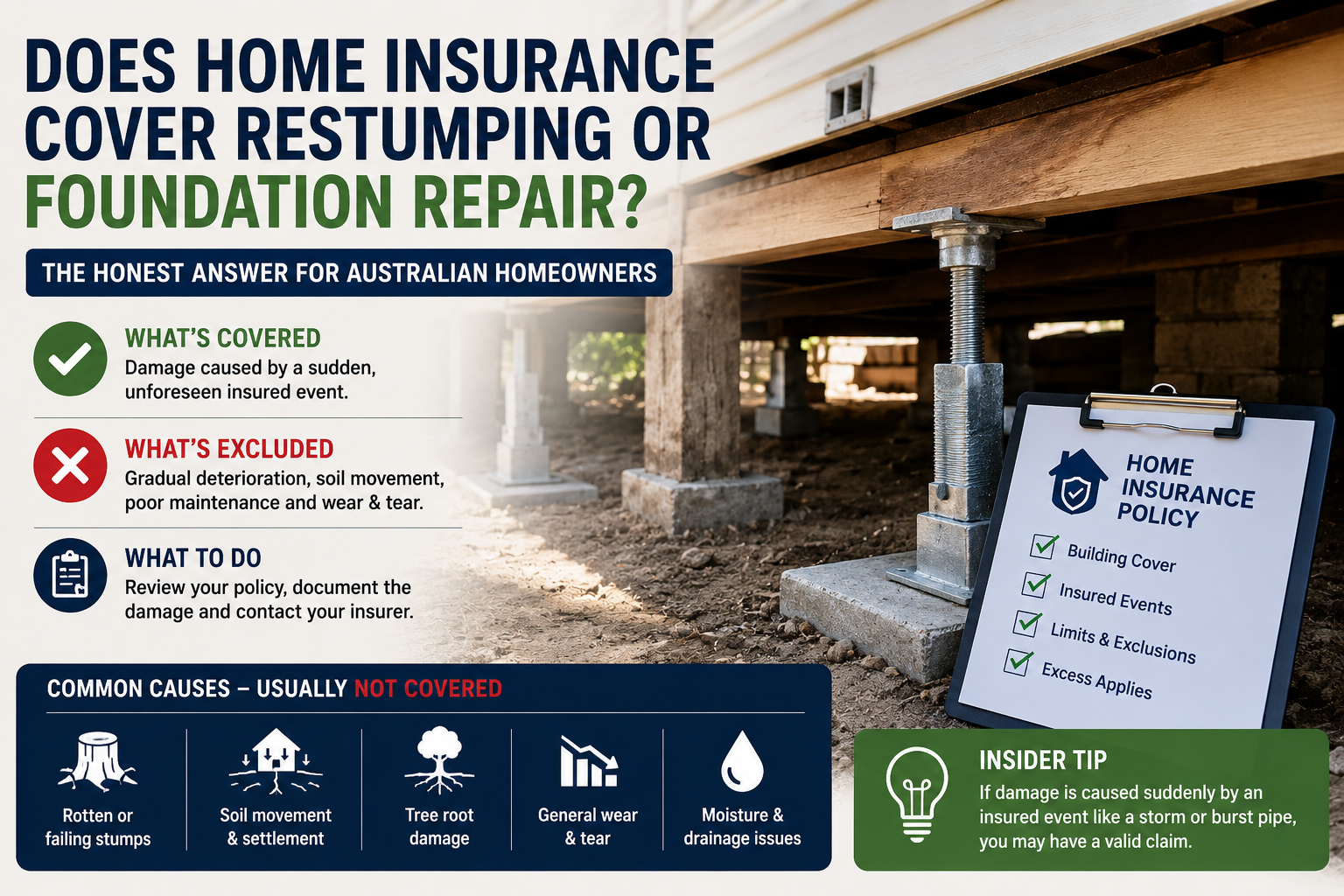
Learn when home insurance may cover restumping or foundation repairs, common exclusions, claim options, and what Wollongong homeowners need to know.
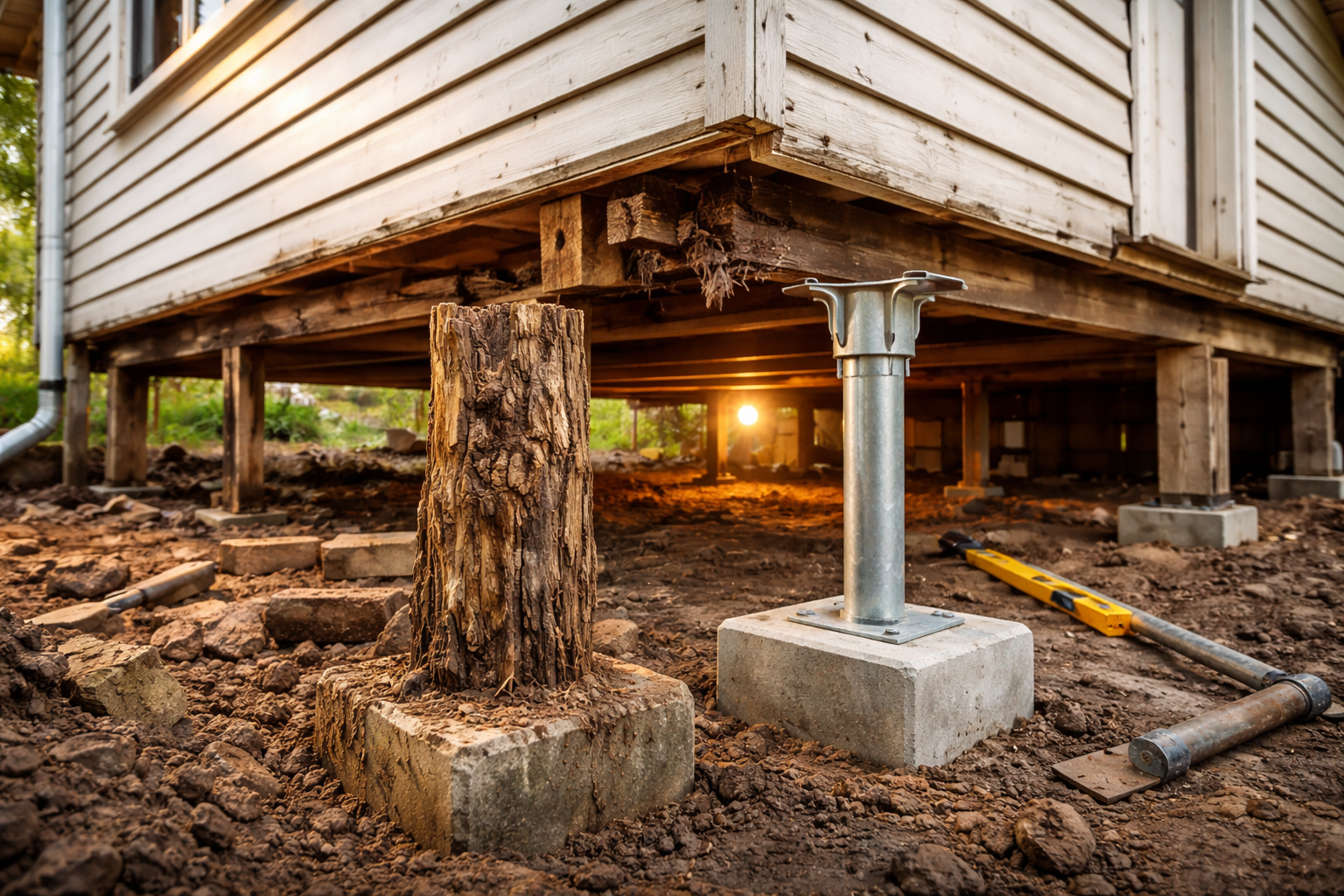
Learn the 7 warning signs your Wollongong home needs restumping. Discover how uneven floors, cracks, and sticking doors signal foundation issues.
Discover the top 7 common misconceptions about restumping, from costs to structural risks, and learn what homeowners really need to know before starting the process.
Compare steel and concrete stumps to determine the best option for coastal homes. Explore their durability, resistance to corrosion, and overall suitability.
From road debris to sudden temperature changes, learn the 5 leading causes of rear window damage in Australia and how to avoid expensive repairs.