wollongongrestumping@gmail.com


How Much Does Restumping Cost in Wollongong?
Rao Hasnain • June 7, 2026
Why Restumping Quotes Vary So Widely in the Illawarra
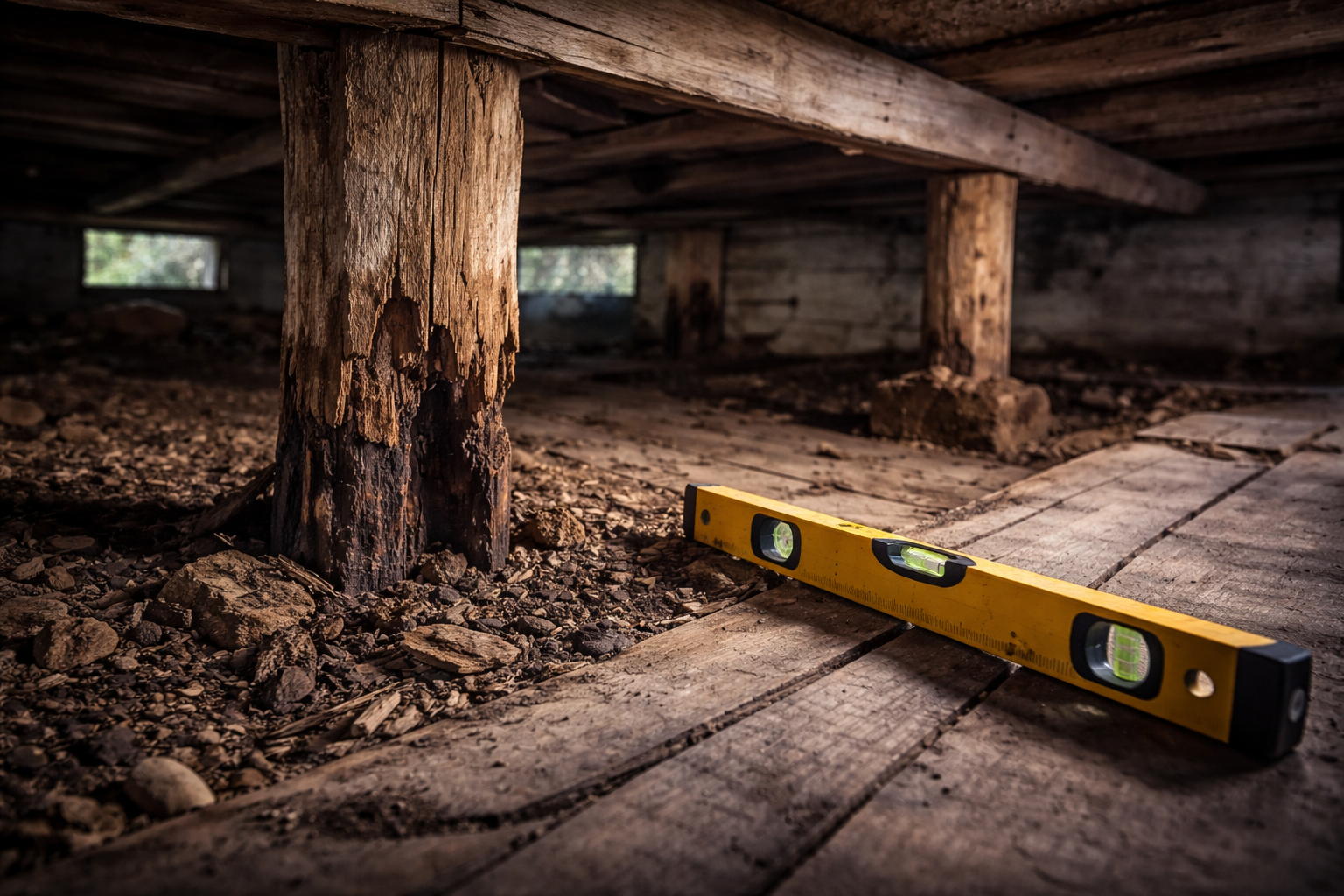
You have noticed the floors sloping. A few doors have started sticking. You have called two restumping companies and received quotes that are thousands of dollars apart. Now you're not sure whether you're being overcharged, underquoted, or whether both figures are even in the right ballpark.
This is the most common frustration Wollongong homeowners face when they first start investigating restumping, and the wide variation in quotes is not a sign that something suspicious is happening. It's a reflection of the fact that restumping costs are genuinely driven by a combination of variables that are unique to every property. The number of stumps, the material specified, the soil conditions beneath the house, the accessibility of the subfloor, and whether the job is a partial or full restump all push the final figure in different directions.
Honest Price Ranges | What Wollongong Homes Are Paying
There is no single national rate for restumping, and the Illawarra's specific soil and terrain conditions mean Wollongong figures can differ from Melbourne or Brisbane comparisons. Here are realistic 2025 price ranges for the Wollongong region, based on supply and installation of new stumps by a licensed contractor:
Per stump (installed, all materials included):
- Treated timber stumps: $400–$600 per stump
- Concrete stumps: $500–$800 per stump
- Galvanised steel stumps: $600–$1,000 per stump
Partial restumping (10–20 stumps):
- $3,000–$8,000 depending on material and access
Full house restumping (standard 3-bedroom weatherboard, 40–60 stumps):
- Concrete stumps: $10,000–$18,000
- Steel stumps: $14,000–$25,000+
- Timber stumps: $8,000–$14,000
Total project cost range: Most Wollongong restumping projects fall between $8,000 and $22,000. Complex jobs those with difficult subfloor access, reactive clay soils requiring deeper footings, or sloping blocks in suburbs like Mount Keira, Figtree, or Austinmer can push beyond $30,000.
Any quote that comes in dramatically below these ranges deserves scrutiny. Significantly underpriced restumping often indicates insufficient footing depth, skipped building permits, incorrect stump specifications for local soil conditions, or unlicensed labour. Poor restumping work creates consequences that are far more expensive to rectify than the original job.
The Biggest Pricing Variable: Stump Material
Material choice is the single largest factor in per-stump cost, and the decision is not purely financial. Each material performs differently in Wollongong's specific environment, and choosing the wrong material for local soil and moisture conditions can shorten stump lifespan significantly.
Treated Timber Stumps
Timber is the most affordable option and was the original material in most of Wollongong's pre-1970s housing stock. Modern treated pine stumps are chemically protected against termite damage and rot, making them more durable than the untreated hardwood stumps they typically replace.
However, in Wollongong's coastal climate, where moisture levels, humidity, and salt air are elevated compared to inland properties, even treated timber has a shorter effective lifespan than concrete or steel. For coastal suburbs from Thirroul to Shellharbour, timber stumps require more frequent inspection and are more likely to need replacement again within 20–30 years.
Concrete Stumps
Concrete is the most popular material choice for Wollongong restumping jobs and represents the best balance of durability, termite resistance, and cost-effectiveness for most Illawarra properties. Pre-cast concrete stumps are not susceptible to rot or termite damage, do not corrode, and when correctly installed with adequate footing depth for local soil conditions, can be expected to last 50+ years.
For properties on reactive clay soils which cover a significant portion of Wollongong's residential areas along the coastal plain the footing depth and concrete specification must account for seasonal soil movement. An experienced local contractor will know the appropriate footing depth for specific soil classifications across the Illawarra; a contractor unfamiliar with local conditions may underspecify and create a job that requires rectification within years.
Galvanised Steel Stumps
Steel stumps are the premium option: the most durable, the strongest under load, and the longest-lasting material available. Adjustable steel stumps also offer the long-term advantage of minor height correction without requiring full replacement if soil movement continues over time.
The trade-off is cost: steel stumps run $100–$400 more per stump than concrete equivalents. For a full restump of a 50-stump home, that premium adds $5,000–$20,000 to the total project cost. Steel stumps must be galvanised or otherwise treated for corrosion resistance, which is particularly important in Wollongong's coastal environment where salt air accelerates metal degradation.
Partial vs Full Restumping: Which Does Your Home Need?
One of the most important cost-determining questions for Wollongong homeowners is whether the job is a partial restump or a full house restump and the difference in cost is substantial.
Partial Restumping
If a professional assessment identifies that only a portion of your stumps have deteriorated or failed, targeted replacement of those stumps can restore structural stability at significantly lower cost. A partial restump of 10–20 stumps typically costs $3,000–$8,000, depending on material and access.
The risk with partial restumping is specification mismatch. If new concrete or steel stumps are installed alongside remaining original timber stumps of different height, stiffness, and compressive strength, the house can behave unevenly under load, creating differential settlement that causes new floor slope and cracking over time.
An experienced Wollongong restumper will ensure that any partial work uses appropriate stump heights and materials to work compatibly with the remaining structure, and will clearly advise if the condition of adjacent stumps makes full restumping the more cost-effective long-term decision.
Full Restumping
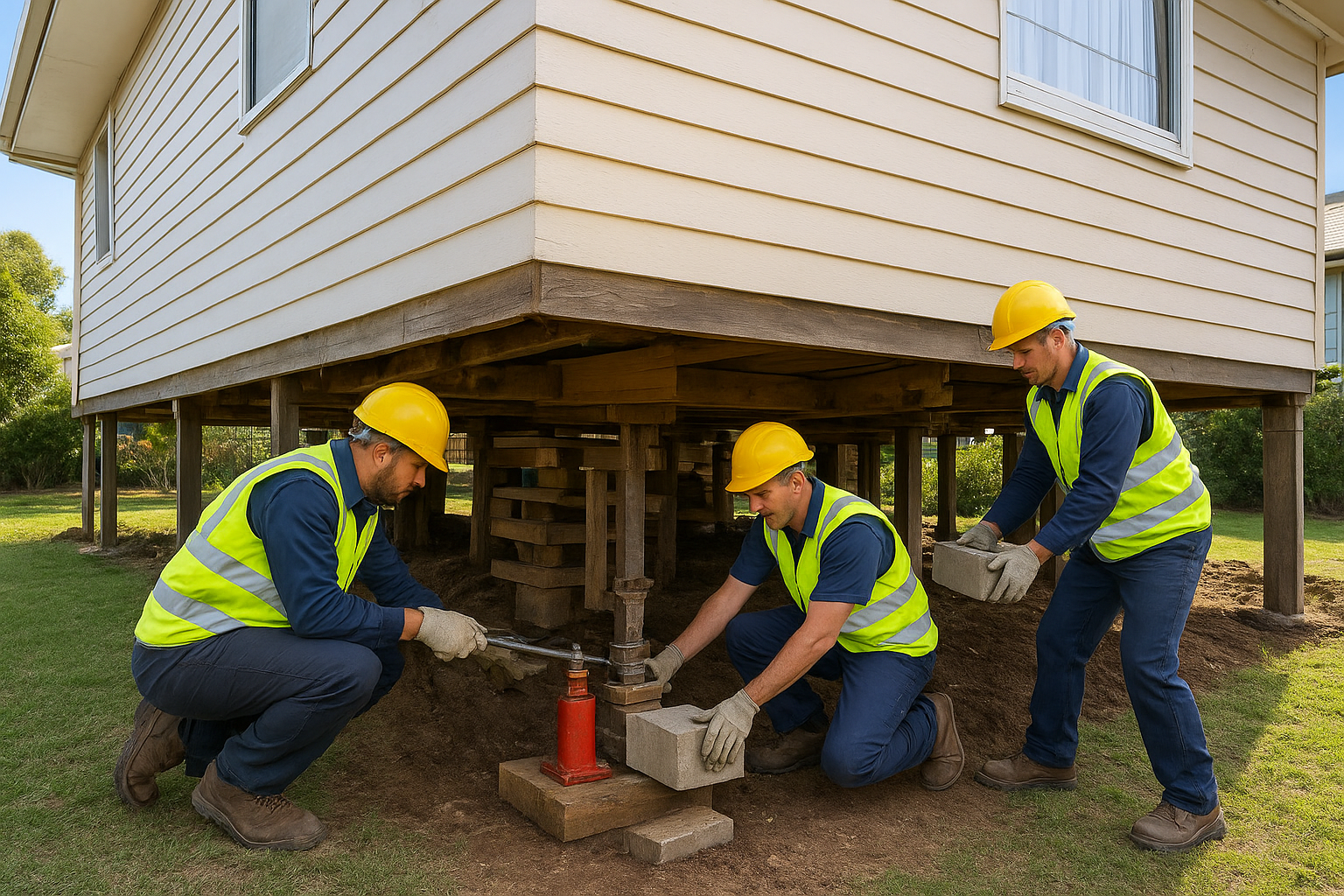
Full restumping replaces every stump under the house in a single project. While the upfront cost is higher, it eliminates the risk of differential settlement, provides a uniform warranty across all foundation points, and avoids the scenario of needing a second partial restump within a few years when the remaining original stumps reach end of life.
For Wollongong homes built before 1970, which includes the majority of the housing stock in inner suburbs like Fairy Meadow, Corrimal, Thirroul, Bulli, and Wollongong CBD surrounds, the original timber stumps are already 50+ years old and past their design life. In these cases, full restumping is almost always the recommended and more cost-effective long-term approach, even when only some stumps are currently showing visible deterioration.
The Wollongong-Specific Cost Factors | Why Your Quote May Differ From National Guides
National price guides give you generic ranges, but they don't explain why your specific Wollongong property might cost more or less than those averages. Here are the local factors that directly affect what you'll pay.
Reactive Coastal Clay Soils
The Illawarra coastal plain sits on a clay-dominant soil profile that expands when wet and contracts when dry what engineers classify as reactive soil. In Wollongong's context, the wet seasons driven by the escarpment's rainfall effect mean these soils move more dramatically and more frequently than in many other Australian cities.
Reactive soils require deeper footings to reach stable bearing capacity. Standard footing depths used in other regions may be insufficient for Wollongong's clay conditions. A proper local restumping job on reactive soil typically requires footings engineered to the site's specific soil classification, which adds both material and labour cost compared to a generic quote based on Melbourne or Brisbane pricing.
Sloping Blocks and Escarpment-Adjacent Properties
A significant portion of Wollongong's residential properties are on sloping terrain, from the gentle grades of suburbs like Mount Saint Thomas and Gwynneville to the pronounced slopes of Mount Keira, Keiraville, and the northern escarpment suburbs. Sloping blocks mean stumps are of varying heights, subfloor access is more complex, and the structural load is distributed unevenly.
Longer stumps on the low side of a sloping block cost more to supply and install. Complex access for machinery and workers increases labour time. These factors can add 20–40% to the cost of a sloping-block restump compared to a flat, easily accessible property of equivalent size.
Subfloor Clearance
The height of your subfloor directly affects how quickly and safely workers can access the stumps. Homes with generous subfloor clearance (600mm and above) are the most straightforward, workers can move freely, work efficiently, and complete the job faster.
Homes with low subfloor clearance (under 400mm) require workers to excavate additional access, use specialised equipment, and spend significantly more time on each stump. This translates to higher labour costs and, in some cases, additional engineering input to safely lift and support the structure during stump removal.
High Rainfall and Moisture Exposure
Wollongong's annual rainfall averaging over 1,200mm per year, significantly above the national average, means subfloor environments here are wetter and more corrosive than in drier Australian cities. This moisture profile accelerates timber stump decay, contributes to concrete carbonation over time, and makes the choice of stump material for longevity even more important.
It also means that a house levelling component may be required alongside restumping if accumulated moisture-related movement has caused the structure to sit unevenly, adding to the total project scope and cost.
Building Permits and Inspections
Restumping is classified as structural building work in NSW and requires a building permit and inspection through a licensed certifier. This is non-negotiable, and any contractor who offers to skip the permit process to reduce costs is creating significant legal and insurance liability for you as the homeowner.
Building permit costs for restumping in the Wollongong area typically add $500–$1,500 to the overall project cost, depending on the scope of work. A reputable contractor will include permit management in their quote and handle the application process as part of the job.
What's Included in a Restumping Quote and What to Watch For
When comparing restumping quotes in Wollongong, a complete quote should include:
- On-site assessment and stump count
- Removal and disposal of old stumps
- Supply and installation of new stumps to specified depth and material
- Re-levelling and securing of the structure onto new stumps
- Building permit application and certification
- Site cleanup and subfloor reinstatement
- Workmanship warranty (reputable contractors in the Illawarra offer 10-year warranties as standard)
Items that are sometimes excluded from low quotes and presented as add-ons later include permit fees, stump hole excavation beyond standard depth, disposal of original stumps, and re-levelling if the house has settled unevenly. Clarifying these inclusions before accepting any quote protects you from a final bill that exceeds the original figure significantly.
Realistic Project Budgets for Common Wollongong Home Types
- Pre-war weatherboard cottage, inner suburb (approx. 30–40 stumps, concrete): $7,500–$13,000
- 1950s–1970s brick veneer, flat block (approx. 40–55 stumps, concrete): $10,000–$17,000
- 1960s–1970s home, sloping escarpment block (approx. 40–50 stumps, steel): $16,000–$26,000
- Larger 4-bedroom home, coastal suburb, full steel restump: $20,000–$32,000
- Partial restump, 15–25 stumps, concrete, good access: $4,500–$10,000
These figures assume professional supply and installation, correct footing depth for local soil conditions, and inclusion of
building permits and certification. They reflect current labour and material costs in the Illawarra for mid-2025.
When to Act and Why Waiting Costs More
The financial case for acting on restumping sooner rather than later is straightforward. Deteriorating stumps cause progressive structural movement; sloping floors put stress on wall frames, roof structures, and internal linings. Cracked wall frames allow water ingress that accelerates further timber decay. Door and window frames distort, requiring additional carpentry repair on top of the foundation work.
A restumping job that costs $12,000 today can become a combined foundation repair and stabilisation project costing twice that if the structural consequences of delayed action have spread beyond the stumps themselves.
The free on-site inspection is the most important first step it establishes the actual scope of the work, eliminates guesswork, and gives you an accurate, itemised quote based on your specific property rather than a generic range.
Frequently Askes Questions
1. How many stumps does a typical Wollongong house have?
Most standard three-bedroom homes in Wollongong have between 30 and 60 stumps, depending on the size of the floor plan and whether the subfloor is fully stumped or has a combination of stumped and slab sections.
2. Do I need a building permit to restump my house in NSW?
Yes. Restumping is classified as structural work in NSW and requires a building permit and certified inspection. Your contractor should manage this process as part of the job.
3. How long does a restumping job take in Wollongong?
A full restump of a standard home typically takes two to five days on-site, depending on stump count, access, and soil conditions. Partial restumping of 10–20 stumps is often completed in one to two days.
4. Can I stay in the house during restumping?
In most cases, yes. The house is lifted incrementally using hydraulic jacks and the process is staged so the structure remains stable throughout. Your contractor will advise if any specific sections of the home need to be vacated during lifting.
5. What's the lifespan of new concrete stumps in Wollongong?
Correctly installed concrete stumps in Wollongong's conditions should last 50 or more years. Steel stumps correctly specified for coastal environments offer similar or greater longevity with the added benefit of adjustability.
Ready to work with Wollongong Restumping?
Let's connect! We’re here to help.
Send us a message and we’ll be in touch.
Or give us a call today at 0242026325
Agency Contact Form
More Marketing Tips, Tricks & Tools
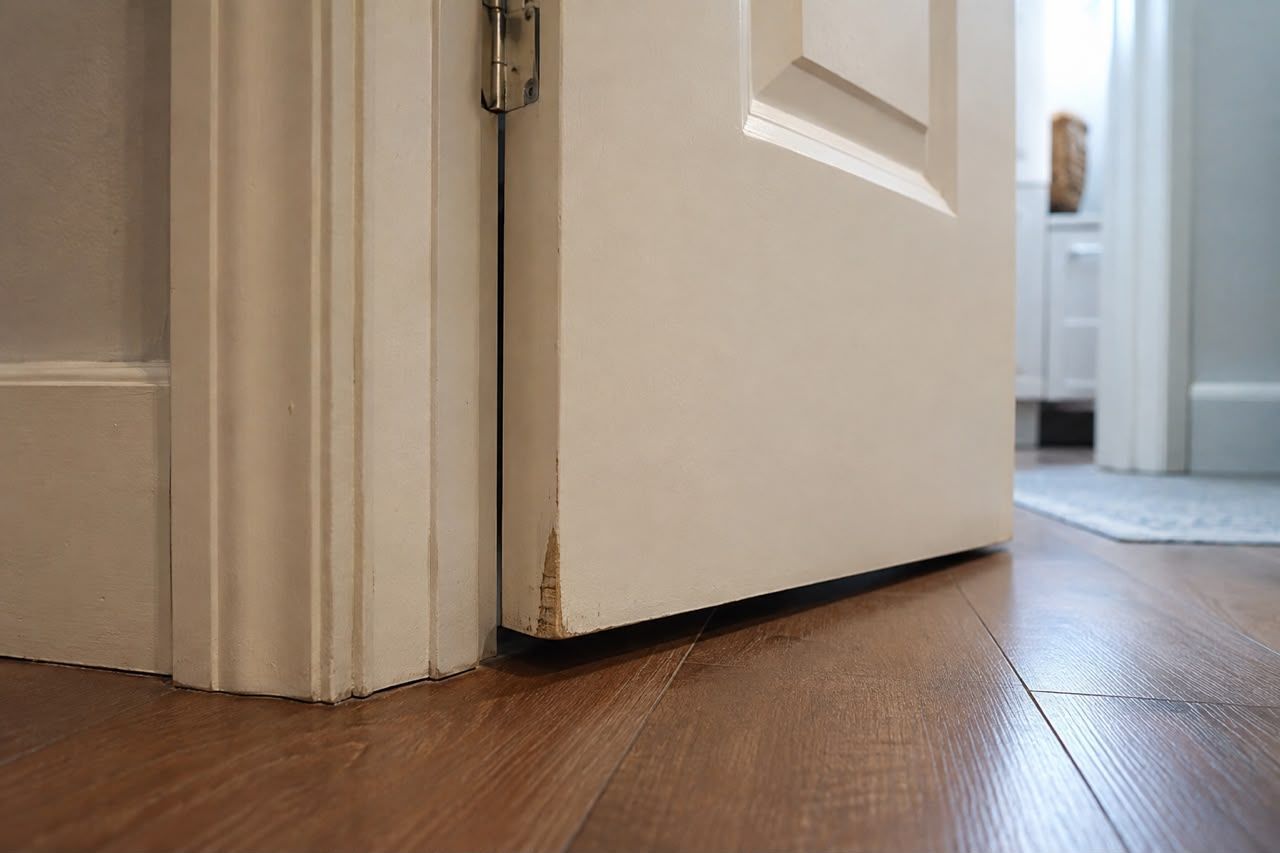
Learn why doors suddenly stop closing after foundation movement, from shifting floors to damaged stumps, and when your Wollongong home may need an assessment.
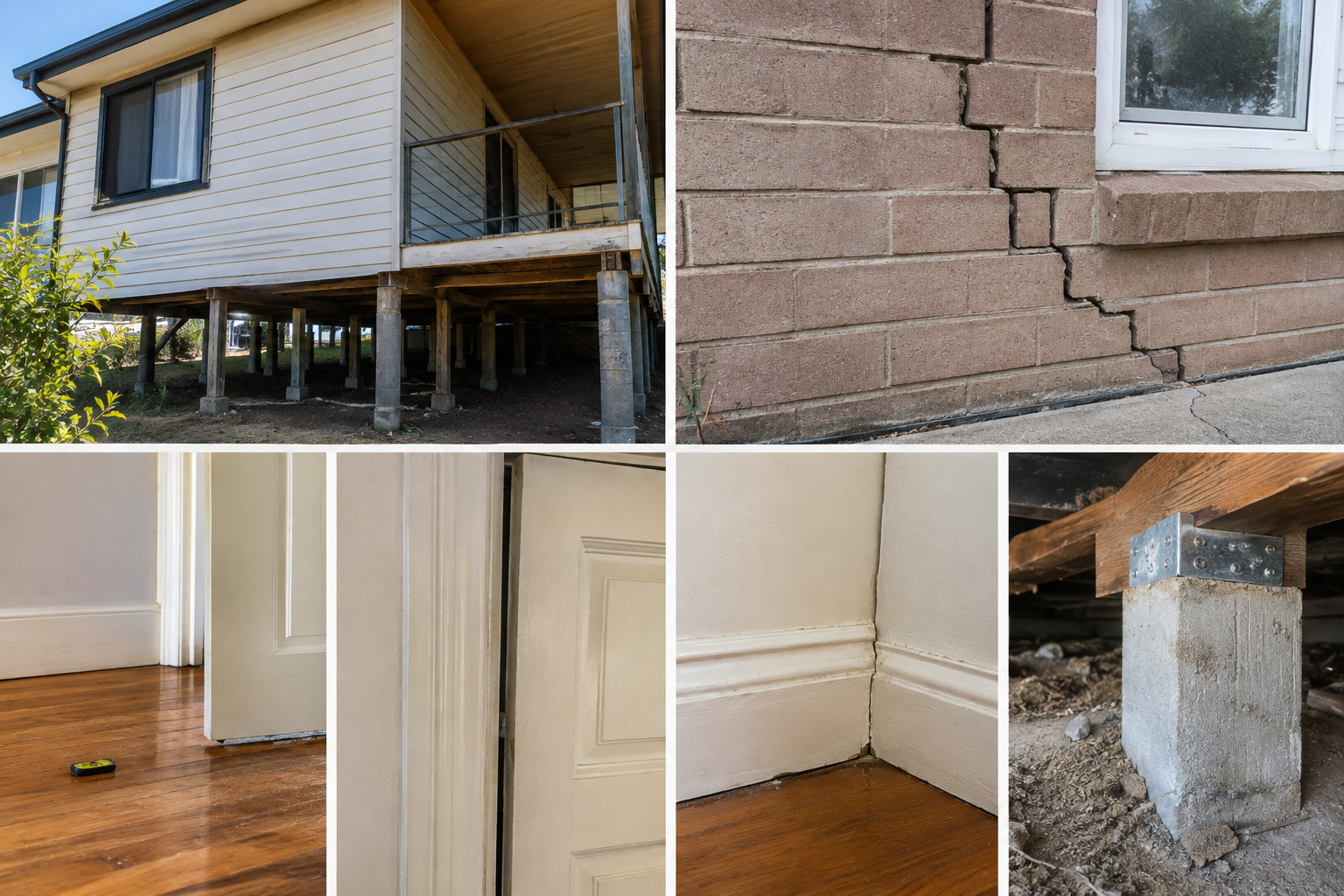
Sagging floors, sticking doors, cracked walls? Here's how to tell if your Wollongong home needs restumping, underpinning, or both.
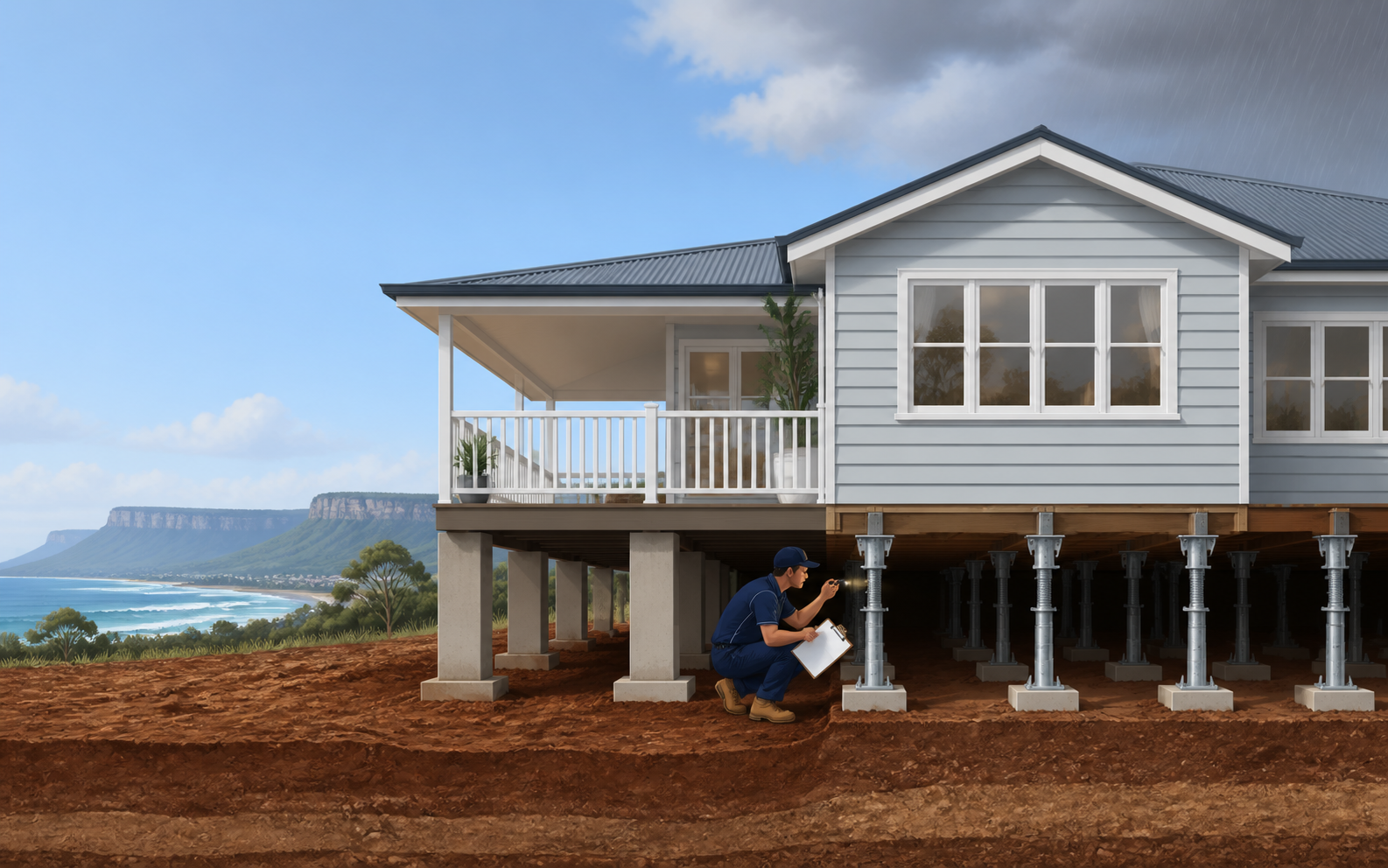
Compare concrete vs steel stumps for Wollongong homes. Learn which option better suits coastal salt air, reactive clay soil, rainfall and your budget.
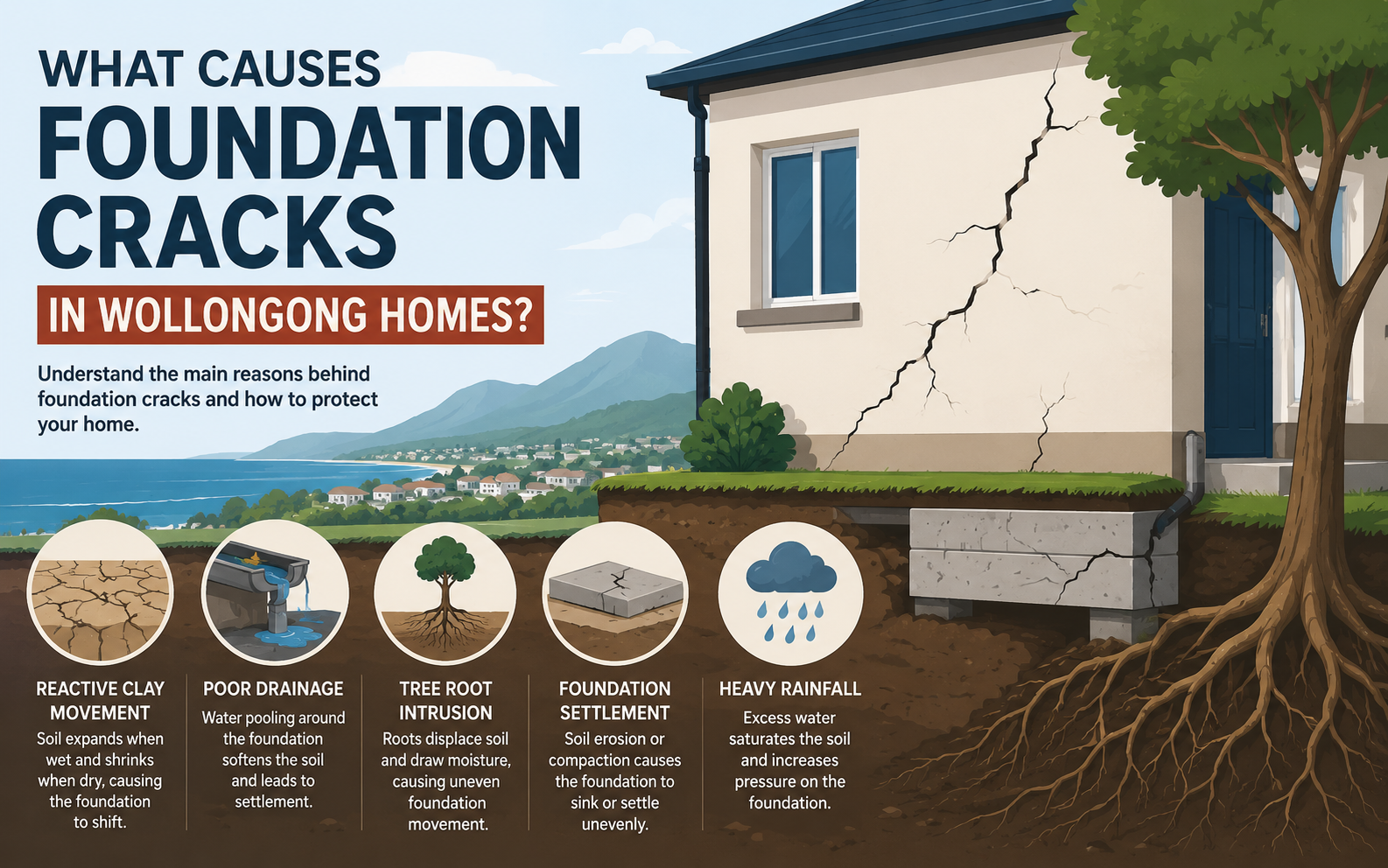
Foundation cracks in Wollongong homes are rarely random. Here's what's causing them, how to read the damage type, and when you need professional repair.
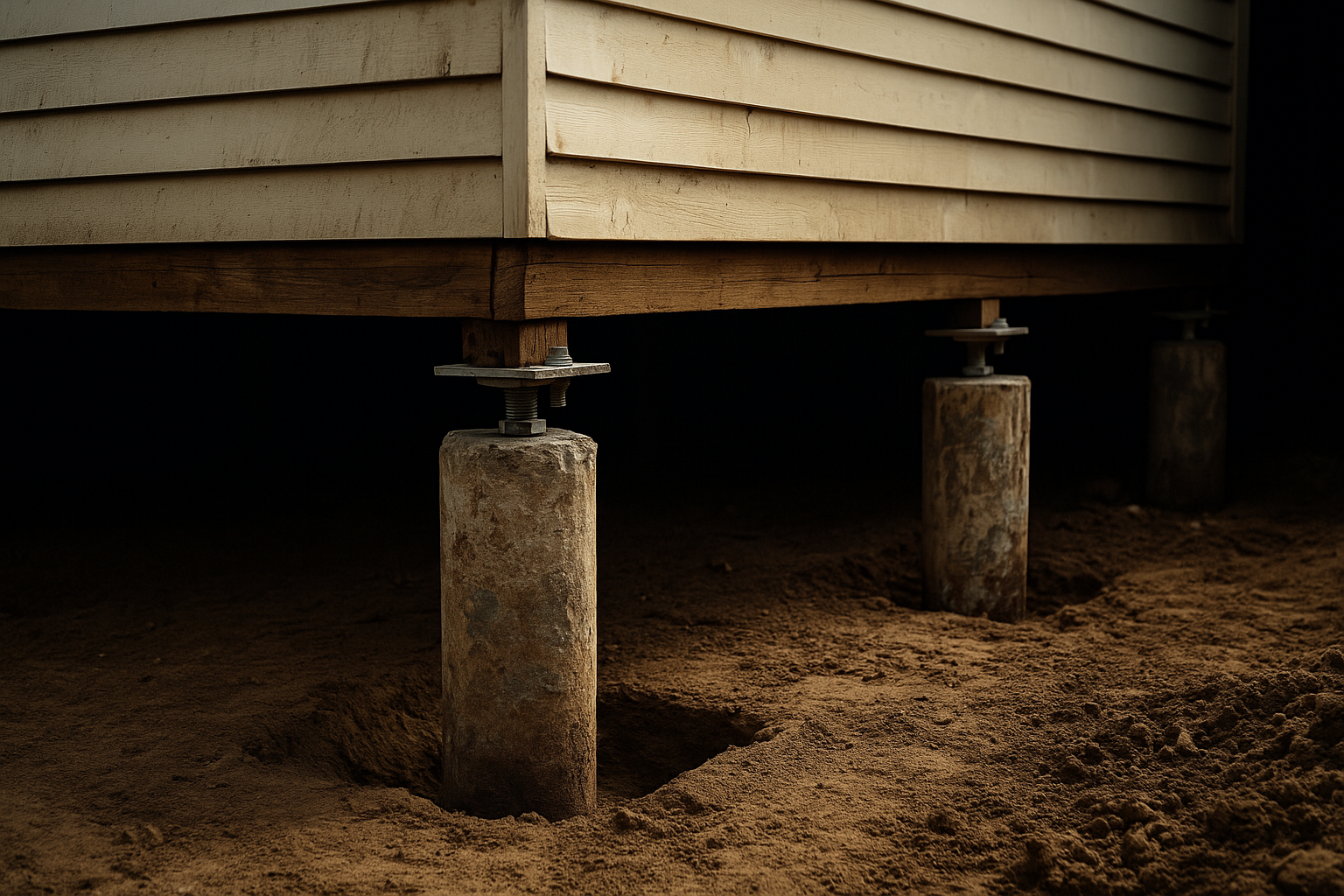
Early foundation repairs prevent structural damage, reduce costly future fixes, and help maintain property value by addressing issues before they worsen.

Learn when home insurance may cover restumping or foundation repairs, common exclusions, claim options, and what Wollongong homeowners need to know.
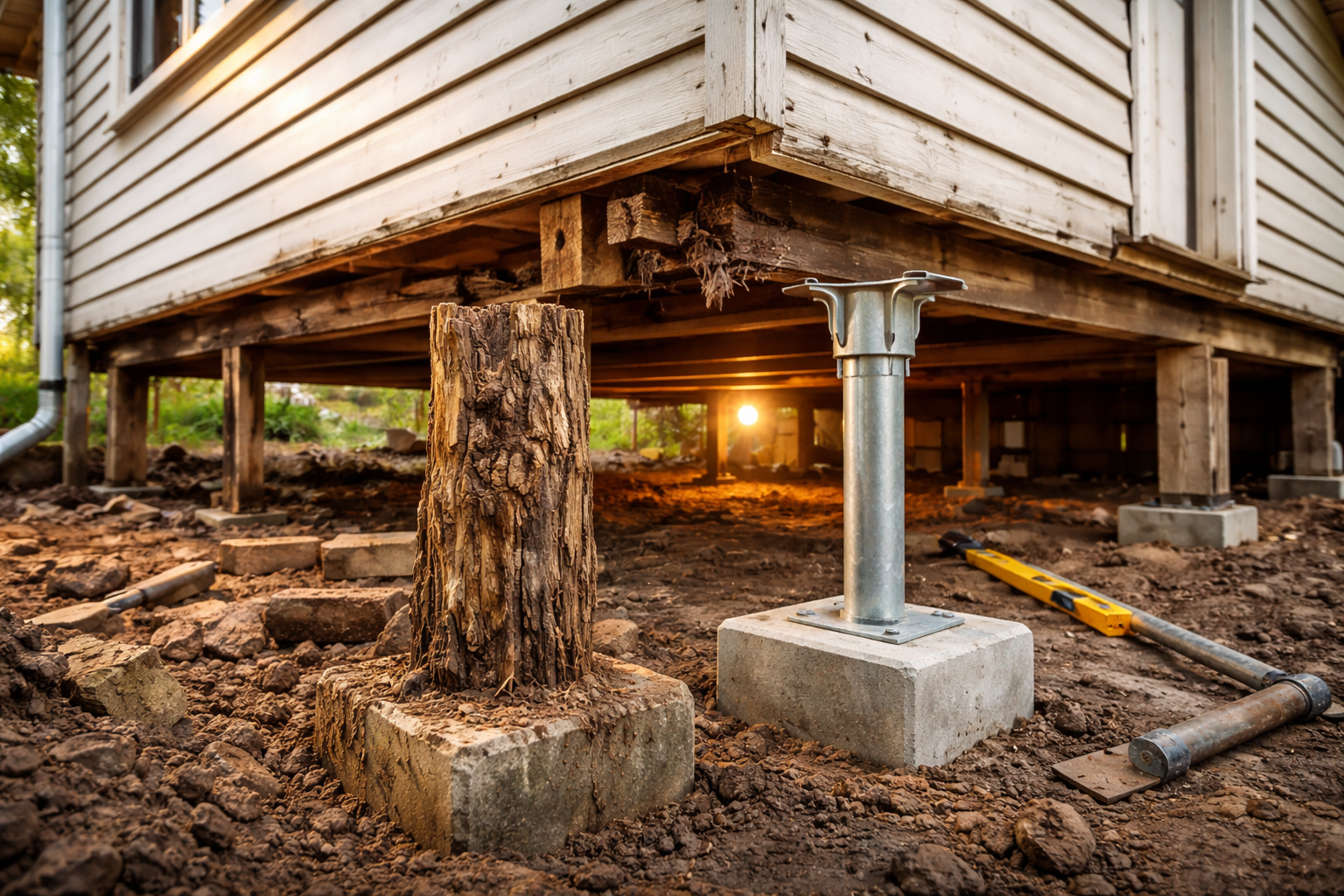
Learn the 7 warning signs your Wollongong home needs restumping. Discover how uneven floors, cracks, and sticking doors signal foundation issues.
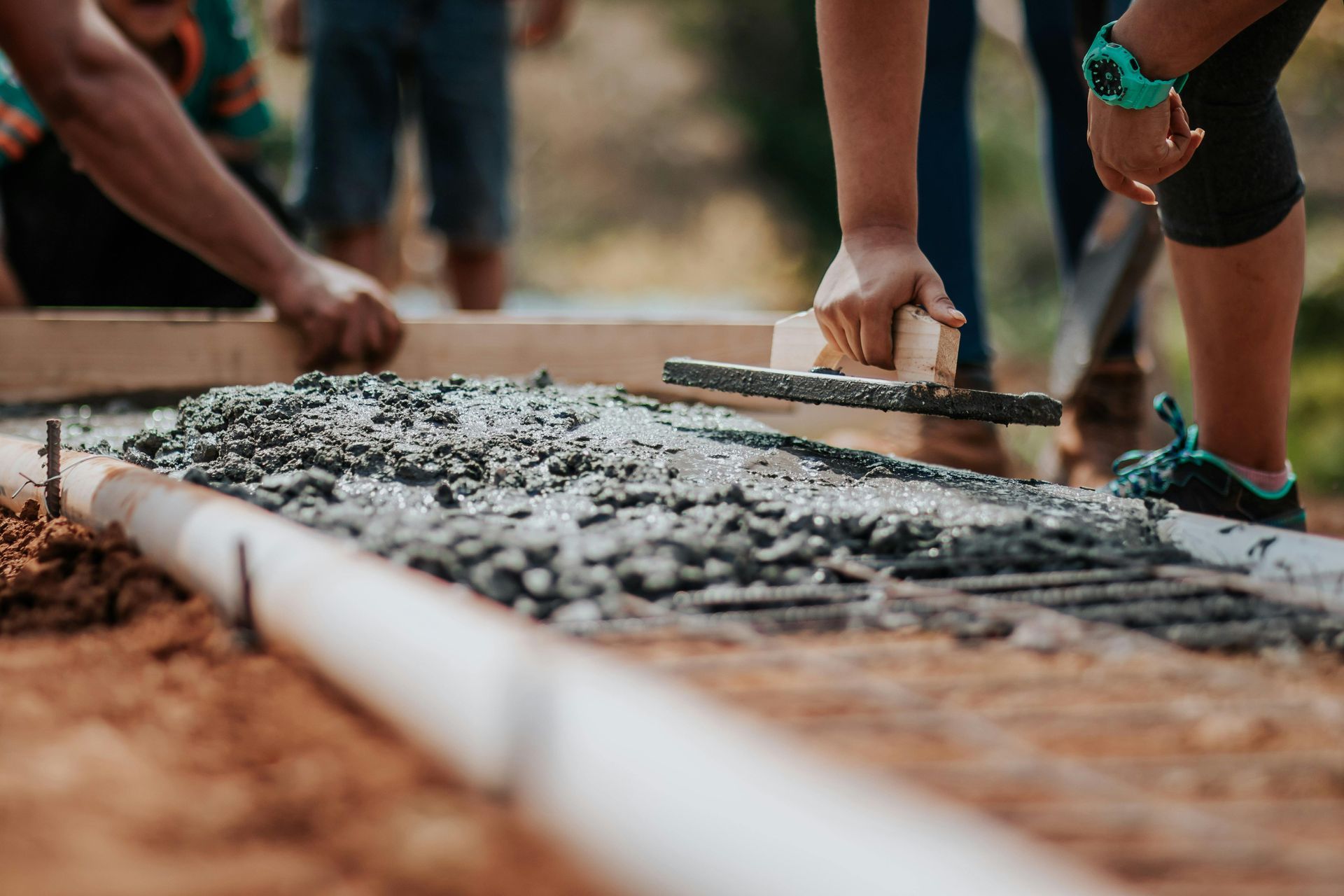
Discover the top 7 common misconceptions about restumping, from costs to structural risks, and learn what homeowners really need to know before starting the process.
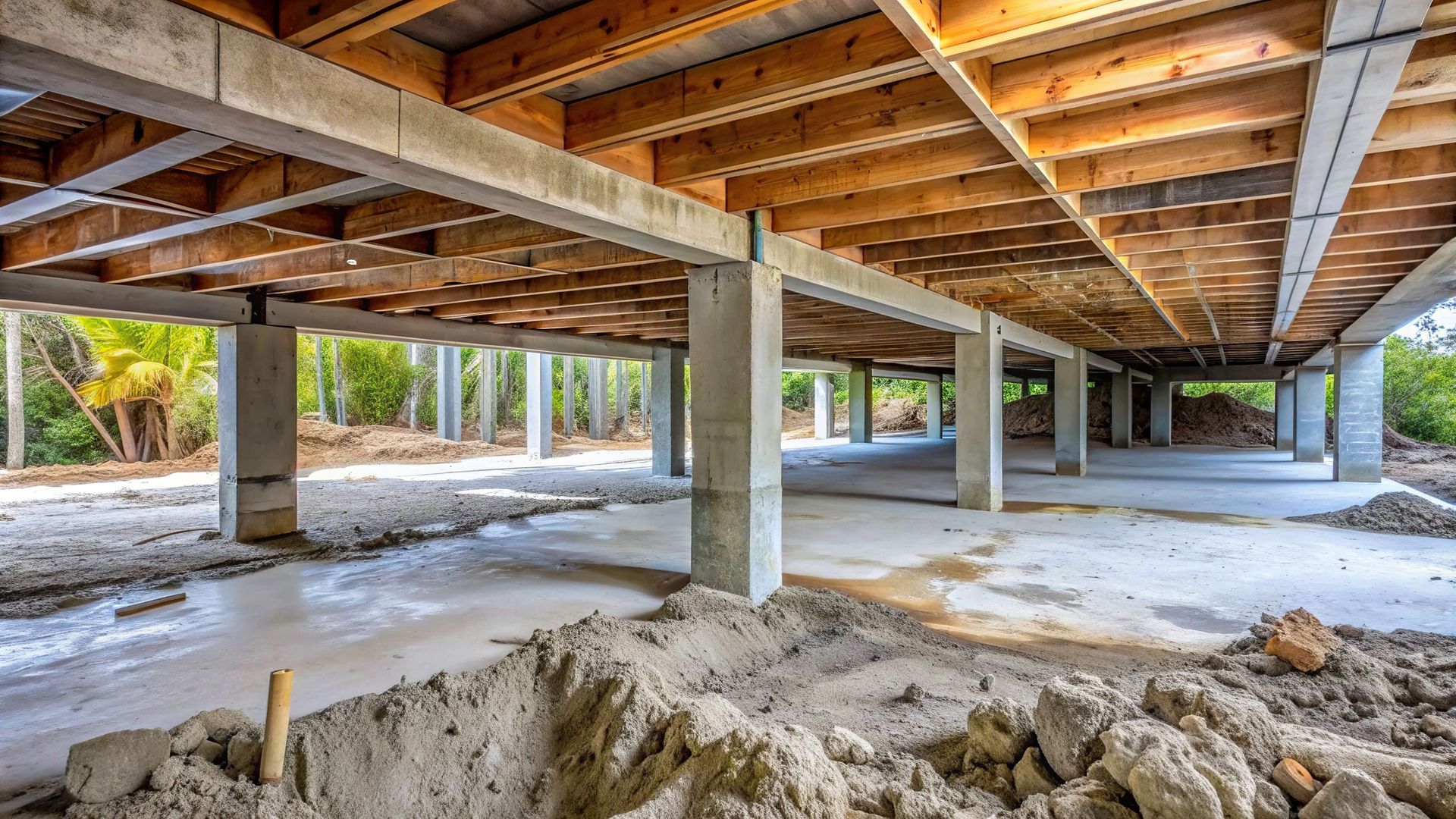
Compare steel and concrete stumps to determine the best option for coastal homes. Explore their durability, resistance to corrosion, and overall suitability.
From road debris to sudden temperature changes, learn the 5 leading causes of rear window damage in Australia and how to avoid expensive repairs.